|
Tradewinds
Home
About Us
Contact us


|
|
The Manual J Design Studio

Executive Summary
Tradewinds Appropriate Technologies is a third party licensed Heating,
Ventilation and Air Conditioning (HVAC) company that specializes in
HVAC system design, analysis, validation and troubleshooting.
We have over 15 years of experience performing Manual J load calculations
and are considered by some to be among the top HVAC system designers
in the country.
We have written 12 HVAC continuing education courses over the last
7 years. These courses focus on system design, ventilation and dehumidification
with a special emphasis on foam homes.
Custom load calculations conducted by an experienced third party
like Tradewinds’ Manual J Design Studio will equip you with
a design that will provide a comfortable, energy efficient living
experience.
Tradewinds is also an approved training provider for Elite Software.
Thank you for your interest in Tradewinds’ Manual J Design Studio.
Please read on for important information concerning who we are and
how we can contribute to your success.
Manual J Design Studio
Air Conditioning System Design for Homes
Company Overview
Tradewinds Appropriate Technologies is a third party, licensed Heating,
Ventilation and Air Conditioning (HVAC) contracting firm specializing
in residential and light commercial HVAC system design. As a third
party, we don’t install or repair equipment; we simply provide
quality assurance for HVAC and spray foam contractors by designing
and testing systems from an independent, unbiased perspective.
HVAC System Design Experience
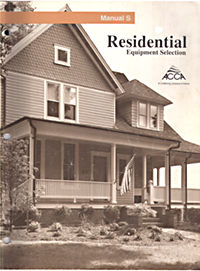
We design HVAC systems using Air Conditioning Contractors of America
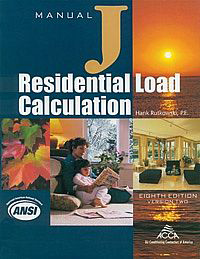
(ACCA) approved Manual J load calculation, Manual S system design
and Manual D duct design software. We began performing computer-based
load calculations over 15 years ago. Our senior designer and training
instructor, Paul Wieboldt, has written and taught more than 12 different
HVAC continuing education courses to licensed HVAC contractors over
the last seven years. These courses focus on the basics of system
design, duct design, mechanical ventilation and dehumidification with
special emphasis on the proper design of HVAC systems for foam homes.
In fact, Tradewinds initiated the dialog and worked directly with
the engineers at Elite and ACCA to incorporate foam insulation into
the design calculations and add spray foam walls and roofs to the
list of building materials. Tradewinds also helped introduce the calculation
for ventilation based on infiltration rates. Tradewinds is considered
by other industry professionals as a Manual J “power user”.
Some of our staff members are among the top HVAC system designers
in the country.
Experience in the Spray Foam Industry
In 2005, Tradewinds bought and refurbished a spray foam machine. We
attended manufacturer training, sprayed a few homes and learned the
process, specifically focusing on what it takes to do a first quality
job. As the number of spray foam contractors significantly increased
in our service area, we found we could better serve our customers
by focusing on system design and performance testing of building envelopes,
insulation and HVAC systems. The insight we gained from this experience
was invaluable. We are now able to design HVAC systems for foamed
homes based on real life experience.
Energy Star HERS Rater Expert Staff
Since 2003, Tradewinds has certified ENERGY STAR™ homes. That
experience evaluating the performance of the building envelope has
helped us fine tune the HVAC equipment selection and mechanical ventilation
to optimize home performance.
The “Go to Guys”
Years of providing consistently accurate, fair and balanced testing,
reporting and problem solving have earned Tradewinds a reputation
as the “go to guys” for new and existing home design issues.
Purpose of Custom Load Calculations
Many local codes now require Manual J and Manual S calculations for
every new home and remodel that changes the load of the house. The
fact is, very few contractors know how to properly execute either
calculation. Although advances in building insulation are rapidly
changing the profile of the average American home, the typical HVAC
contractor still selects an air conditioning system for a home based
on the old rule of thumb of 500 sq. ft. per ton. Unfortunately, most
contractors are afraid to change this long habit of ‘guesstimating’.
This ‘fear factor’ holds many contractors in design paralysis.
In a new home, this practice can have disastrous consequences. As
the building envelope is made more efficient and the effective R-value
is dramatically increased by the use of spray foam and other high
efficiency insulation measures such as SIPs, ICF and dense pack cellulose,
the size of the air conditioning equipment should logically decrease.
A well-constructed high-efficiency building envelope can and does
change the rules. Our years of experience indicate that when properly
assembled, a super efficient home can be cooled with an A/C unit as
little as half the size of one used to cool a conventional home. Consequently,
many HVAC contractors mistakenly install oversized equipment in high
efficiency homes. We’ve received phone calls from building contractors
asking us to do Manual J load calculations for them. Some of their
customers are complaining that it’s “raining in their
house.” This is clearly not the fault of the insulation application.
It is the responsibility of the HVAC contractor to properly match
equipment to the heat load of the house, design in the necessary dehumidification
functions and to provide adequate mechanical ventilation for today’s
tighter, more efficient homes. With our nearly 2 decades of HVAC design
and installation experience, we can guide the HVAC contractor involved
with your projects to the safe efficient solution.
More than Manual J designers, we are masters of Manual S
Over-sizing is a very real problem, but it isn’t the only problem.
Design professionals must also understand the principles of Manual
S regarding equipment selection. It is an all too common mistake when
completing a load calculation alone to miscalculate the equipment
size. Many designers attempt to take the results of a Manual J calculation
and erroneously assume that the heat load estimate for the house is
the recommended equipment size. They further compound the error by
assuming that the nominal capacity of HVAC equipment is equal to its
actual installed output.
Bull’s eye!
To use an analogy, the results of a Manual J load calculation are
like a target with a big red bull’s-eye on it. The Manual S
procedure helps us to select the proper bow and matched arrow that
enable us to hit the bull’s eye every time. Tradewinds has mastered
the art of properly sizing equipment for any location, nation-wide,
by considering local ambient design temperatures and making the correct
adjustments to equipment cooling capacities so that a perfect match
is selected every time.
Custom load calculations conducted by an experienced third party like
Tradewinds’ Manual J Design Studio will equip you with a design
that will provide a comfortable, energy efficient living experience.
Professional Contractor Services:
Tradewinds serves as a national third party HVAC system design firm.
To offer consistency across the nation, Tradewinds is equipped to
serve all of your projects by performing all of the Manual J load
calculations needed. We believe our expertise in HVAC system design
will enhance the value of your products and contractors’ services
by ensuring the right sizing of HVAC equipment for every home. As
mentioned, Tradewinds is also an approved training provider for Elite
Software. Training is available at our Texas Training Center.
We are also available to conduct regional training for your contractors
as needed. Please contact Tim Everett for further information about
our professional contractor services and perferred customer rates
(tim@manualJdesign.com
or 888-799-1326).
To get started with a custom design for your project,
contact us at:
info@manualJdesign.com
or
888-799-1326
Important
announcement concerning humidity!
If you have a tightly built house in East, Central,
South, South Central or North Central Texas, you need to talk
to us about humidity and dehumidifiers. According to ASHRAE,
high efficiency air conditioners might not remove humidity adequately
in our climate in a tightly built house.
Two vital elements of air conditioner design are
the ACCA Manual J load calculation and the ACCA Manual S Equipment
Selection. These are so important that they were mandated in
the 2009 IRC building code.
These design procedures are vital for spray foam,
ICF and SIP homes, but they are even necessary for homes built
to the ENERGY STAR™ guidelines or even to the new IECC
codes.
If you feel warm or clammy when the thermostat
says you should be cool and comfortable, check your humidity
levels. Go to the Air Quality page
for a discussion on humidity.
Remember, ventilation alone is not enough in our
climate!
Important
announcement concerning
spray foam, SIP or ICF Homes
We have seen that designers do not realize that
the new super-insulated homes cause a strange phenomenon in
Texas.
Builders do not primarily design for heating loads
in Texas. However, the super-insulated homes with a slab floor
need to take into account the heating load of the slab. The
slab becomes the largest energy hog in these homes. The designer
needs to specify an insulated slab to overcome this problem.
Call or write us for more information. |
|